Showing posts with label kittler. Show all posts

Thursday, 3 July 2014

slipware


In the thermal inkjet process, the print cartridges contain a series of tiny chambers, each containing a heater, all of which are constructed by photolithography. To eject a droplet from each chamber, a pulse of current is passed through the heating element causing a rapid vaporization of the ink in the chamber to form a bubble, which causes a large pressure increase, propelling a droplet of ink onto the paper (hence Canon's trade name of Bubble Jet). The ink's surface tension, as well as the condensation and thus contraction of the vapor bubble, pulls a further charge of ink into the chamber through a narrow channel attached to an ink reservoir. The inks used are usually water-based and use either pigments or dyes as the colorant. The inks used must have a volatile component to form the vapor bubble, otherwise droplet ejection cannot occur. As no special materials are required, the print head is generally cheaper to produce than in other inkjet technologies.

Most commercial and industrial inkjet printers and some consumer printers (those produced by Epson and Brother Industries) use a piezoelectric material in an ink-filled chamber behind each nozzle instead of a heating element. When a voltage is applied, the piezoelectric material changes shape, which generates a pressure pulse in the fluid forcing a droplet of ink from the nozzle. Piezoelectric (also called Piezo) inkjet allows a wider variety of inks than thermal inkjet as there is no requirement for a volatile component, and no issue with kogation (buildup of ink residue), but the print heads are more expensive to manufacture due to the use of piezoelectric material (usually PZT, lead zirconium titanate). A DOD process uses software that directs the heads to apply between zero to eight droplets of ink per dot, only where needed. Piezo inkjet technology is often used on production lines to mark products. For instance, the "use-before" date is often applied to products with this technique; in this application the head is stationary and the product moves past. Requirements of this application are high speed, a long service life, a relatively large gap between the print head and the substrate, and low operating cost.

No one writes any more …   http://www.ctheory.net/articles.aspx?id=74

Tuesday, 18 October 2011

Friedrich A. Kittler (born 1943 in Rochlitz, Saxony - October 18, 2011 in Berlin)

http://excerpter.wordpress.com/2006/10/02/friedrich-kittler-the-city-is-a-medium/

Saturday, 19 February 2011

badische anilin und soda fabrik


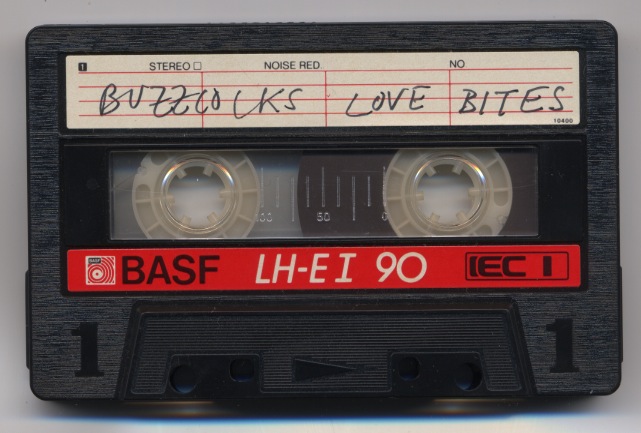
BASF was founded in 1865 to produce coal tar dyes. Its first products were aniline dyes, whose success was enmeshed with that of the textile industry. In 1871 the red dye alizarin was synthesised. Other synthetic pigments followed… Production shifted away from colour stuffs to fertilisers in the early twentieth century, and in the 'stabilsation' years BASF merged with IG Farben as part of a rationalisation of the chemical industry. At this time production concentrated on synthetic rubber, fuels, operating agents and surface coatings, as well as advancing a sideline in recording technologies [notably magnetic tape for the Magnetophone recording device].

Synthetic Worlds / Esther Leslie / Reaktion / 2005

The interface between coal and steel is coal-tar. Imagine coal, down in the earth, dead black, no light… Growing older, blacker, deeper, in layers of perpetual night…
A thousand different molecules waited in the preterite dung. This is the sign of revealing. Of unfolding.This is one meaning of mauve, the first new colour on Earth, leaping to Earth's light from its grave miles and aeons below.

Pynchon / Gravity's Rainbow

NON SINE SOLE IRIS

…the rotten shimmer

Magnetic tape recording, which simulates the physical grooves of a phonograph record via continuous magnetically alterable particles, was first demonstrated by BASF/AEG in 1935 (Schoenherr), although this development did not reach the United States until the Allied forces captured Radio Luxembourg in 1944, discovering “a new Magnetophone of extraordinary capabilities” (Kittler, 1999:106).

Sunday, 9 January 2011

feather fingers


Media are not pseudopods for extending the human body. They follow the logic of escalation that leaves us and written history behind it. (Kittler in Geschichte der Kommunikationsmedien.

Thursday, 25 March 2010

lenticular


Pushed to their margins even obsolete media become sensitive enough to register the signs and clues of a situation. Then, as in the case of the sectional plane of two optical media, patterns and moires emerge; myths, fictions of science, oracles…
Kittler GFT XL Preface

Wednesday, 14 October 2009

Technische Schriften

"As we know and simply do not say, no human being writes anymore. [...] Today, human writing runs through inscriptions burnt into silicon by electronic lithography [...]. The last historic act of writing may thus have been in the late seventies when a team of Intel engineers [plotted] the hardware architecture of their first integrated microprocessor."
(Kittler, Es gibt keine Software. In: ders.: Draculas Vermächtnis. Technische Schriften).


Wednesday, 25 March 2009

words

paleography tutorial


...Before there can be any interpretation of dreams, three secular fallacies need to be dismissed. The first is the philosophers' prejudice, which holds that dreams are without objective, reasonable connection and are unworthy of interpretation. As opposed to Hegel [whom, justifiably, he cites only indirectly], Freud prefers to follow the lay opinion, that assumes "a meaning, though a hidden one" in the dream. But popular dream interpretation has remained translation in two complementary ways: it makes the whole dream "symbolic" of global meanings, or it translates parts of a dream by "mechanically transferring" each part "into another sign having a known meaning, in accordance with a fixed key." Both techniques, the analogical and the digital, presuppose that the two media, the dream and language, are either similar or co-extensive. The new science rejects these two views as naive...

Friedrich A. Kittler, Discourse Networks 1800 - 1900, Stanford 1990

Sunday, 25 January 2009

Simon's words


Rebus is the instrumental case of res: things can be used like words and words like things. Interpretation has everything to learn from "the linguistic tricks of children, who sometimes treat words as though they were objects, and moreover invent new languages and artificial syntactic forms". Kittler: 1990