Showing posts with label melville. Show all posts

Friday, 14 April 2017

from Hinge Picture By Susan Howe

“Crawl in,” said the witch, “and see if it’s hot enough to put the bread in.”
—Hansel and Gretel

All roads lead to rooms.
—Irish Proverb
a stark
                  Quake

               a numb
                  Calm


                      *


               clutching my Crumbl
               ejumble
                  among
               Tombs and
               in Caves
                  my
                Dream
                Vision


https://www.theparisreview.org/interviews/6189/susan-howe-the-art-of-poetry-no-97-susan-howe

William James says that in times of trauma and crisis a door is opened to a place where facts and apparitions mix.


When I was a visiting poet at Temple, I encountered two huge volumes called Melville’s Marginalia. Its editor, Wilson Walker Cowen, had collected and printed all the passages Melville had marked in his personal library. At first glance, this alphabetically arranged collection of quotations from numerous authors resembled a giant Charles Olson poem. The preface said Cowen died young. All this immense labor had been for his graduate- student degree. I thought of the pale usher and the sub-sub-librarian in Moby-Dick. Then, as I was going over the material, I came upon Melville’s notes in his copy of the Irish poet James Clarence Mangan’s collected works. I remembered singing Mangan’s “Róisín Dubh” with the Reddins. I looked into Mangan’s life and work, and by following Mangan—God! I couldn’t believe it—I found that he may have been a source for the character of Bartleby.
Earlier, when I was writing the poems that would become Frame Structures, I stumbled on Longfellow’s wife Frances Appleton, who died by fire in their home library. She was trying to paste locks of her children’s hair into an album, using a candle to melt the wax, when a spark fell on her dress. His beard you see in the famous photograph was grown to cover the scars on his face, which was badly burned when he tried to save her. The Longfellow House is now a National Historic Site, and when I took the tour I asked the guide which was the room she burned in. He brushed the question aside as if such a thing had never happened. It doesn’t fit the sunny portrait of the author they are hired to exhibit.
In the same way, I came upon Jonathan Edwards’s sister Hannah by chance when I slipped her “private writings” out of a folder in the Beinecke Reading Room at Yale.
I don’t want to be so arrogant as to say these are recoveries. Maybe certain people find me.

***
 from My Emily Dickinson

When I love a thing I want it and I try to get it. Abstraction of the particular from
the universal is the entrance into evil. Love, a binding force, is both envy and
emulation. HE (the Puritan God) is a realm of mystery and will always remain
unknowable, authoritarian, unpredictable. Between revealed will and secret will
Love has been torn in two.

Saturday, 16 March 2013

laws against images

[T]he great Leviathan is that one creature in the world which must remain unpainted to the last.
Herman Melville, Moby-Dick

Friday, 22 January 2010

Chapter ciii - MEASUREMENT OF THE WHALE'S SKELETON


Moreover, at a place in Yorkshire, England, Burton Constable by name, a certain Sir Clifford Constable has in his possession the skeleton of a Sperm Whale…Sir Clifford's whale has been articulated throughout; so that, like a great chest of drawers, you can open and shut him, in all his bony cavities - spread out his ribs like a gigantic fan - and swing all day upon his lower jaw.

Locks are to be put upon some of his trap-doors and shutters; and a footman will show round future visitors with a bunch of keys at his side.

Sir Clifford thinks of charging twopence for a peep at the whispering gallery in the spinal column; threepence to hear the echo in the hollow of his cerebellum; and sixpence for the unrivalled view from his forehead.

Saturday, 16 January 2010

hunters and gatherers

Hunter&Gatherer


Some pretend to see a difference between the Greenland whale of the English and the right whale of the Americans. But they precisely agree in all their grand features; nor has there yet been presented a single derterminate fact upon which to ground a radical distinction. It is by endless subdivisions based on the most inconclusive differences, that some departments of natural history become so repellingly intricate.

Sunday, 2 August 2009

Napoli 19th February 1857

Long narrow lanes. Arches, crowds. Tumblers in narrow street. Blocked way. Balconies with women. Cloth on ground.

Saturday, 1 August 2009

calendar

Herman Melville was born in New York City on August 1, 1819

Wednesday, 6 May 2009

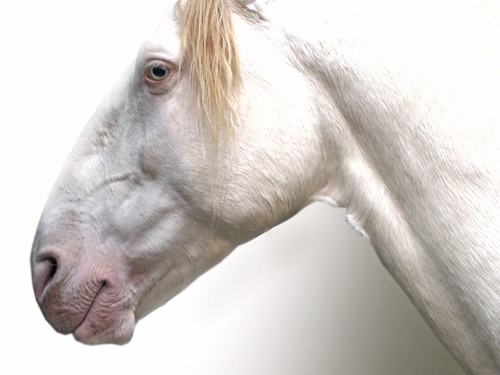
albino

Most famous in our Western annals and Indian traditions is that of the White Steed of the Prairies; a magnificent milk-white charger, large-eyed, small-headed, bluff-chested, and with the dignity of a thousand monarchs in his lofty, overscorning carriage. He was the elected Xerxes of vast herds of wild horses, whose pastures in those days were only fenced by the Rocky Mountains and the Alleghanies. At their flaming head he westward trooped it like that chosen star which every evening leads on the hosts of light. The flashing cascade of his mane, the curving comet of his tail, invested him with housings more resplendent than gold and silver-beaters could have furnished him. A most imperial and archangelical apparition of that unfallen, western world, which to the eyes of the old trappers and hunters revived the glories of those primeval times when Adam walked majestic as a god, bluff-bowed and fearless as this mighty steed. Whether marching amid his aides and marshals in the van of countless cohorts that endlessly streamed it over the plains, like an Ohio; or whether with his circumambient subjects browsing all around at the horizon, the White Steed gallopingly reviewed them with warm nostrils reddening through his cool milkiness; in whatever aspect he presented himself, always to the bravest Indians he was the object of trembling reverence and awe. Nor can it be questioned from what stands on legendary record of this noble horse, that it was his spiritual whiteness chiefly, which so clothed him with divineness; and that this divineness had that in it which, though commanding worship, at the same time enforced a certain nameless terror.

But there are other instances where this whiteness loses all that accessory and strange glory which invests it in the White Steed and Albatross.

Moby Dick Chapter xlii - THE WHITENESS OF THE WHALE


REV 6:2 And I saw, and behold a white horse: and he that sat on him had a bow; and a crown was given unto him: and he went forth conquering, and to conquer.

Saturday, 2 May 2009

cave canem/ beware of the dog


rampant regardant, rampant guardant, rampant, passant guardant, statant with tail extended, statant guardant, passant, dormant, couchant, sejant, sejant affronte erect, sejant erect.

House of the Tragic Poet

Upon entering the vestibule of one of the disinterred houses of Pompeii the visitor starts at a large black dog, his chain attached to a spiked collar, in act apparently of fiercely springing upon him. It is a life-like mosaic worked into the pavement. Under it appears the words

CAVE CANEM.