Showing posts with label monument. Show all posts
Thursday, 6 September 2018
Tuesday, 20 February 2018
efficacy of the markers in deterring inadvertent human intrusion
The expert panel identified basic
principles to guide current and future marker development efforts: (1)
the site must be marked, (2) message(s) must be truthful and
informative, (3) multiple components within a marker system, (4)
multiple means of communication (e.g., language, pictographs, scientific
diagrams), (5) multiple levels of complexity within individual messages
on individual marker system elements, (6) use of materials with little
recycle value, and (7) international effort to maintain knowledge of the
locations and contents of nuclear waste repositories. The efficacy of
the markers in deterring inadvertent human intrusion was estimated to
decrease with time, with the probability function varying with the mode
of intrusion (who is intruding and for what purpose) and the level of
technological development of the society. The development of a
permanent, passive marker system capable of surviving and remaining
interpretable for 10,000 years will require further study prior to
implementation
Wednesday, 13 September 2017
stone stackers
“This movement of stones, whilst it may seem benign, is eroding the
nationally protected archaeological features of the site as well as its
local distinctiveness. We would encourage visitors to take only
photographs of, and to leave only footprints at, this very precious and
unique site.”
Saturday, 3 September 2016
wales
Wales
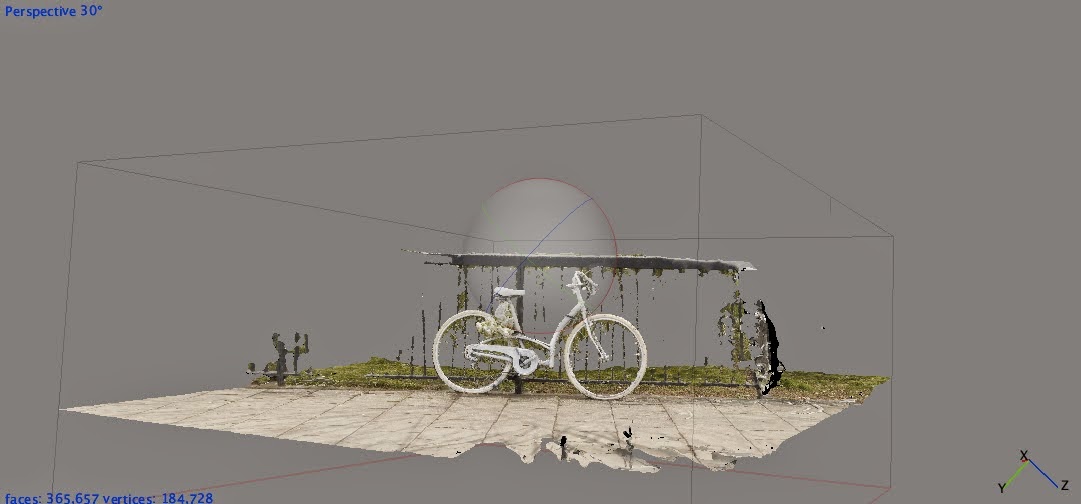
by csm_photosculpture
on Sketchfab
The flat summit of Hay bluff overlooks the middle Wye Valley and the book town of Hay-on-Wye is marked by a triangulation pillar at a height of 677 metres (2,221 ft).
Saturday, 30 January 2016
monu/mental
If I define a hologram just as well as my nervous system defines this table, then there is no real technical reason anymore to state that this table is the original and the hologram is a simulation, or vice versa. This would be metaphysics. If I define this hologram better than the nervous system does then suddenly this table becomes a simulation of the hologram.
Labels:
3D,
iconoclast,
monument,
opengl,
statue,
syria,
Vilém Flusser
Wednesday, 4 November 2015
Wednesday, 7 October 2015
Sunday, 23 August 2015
Saturday, 15 August 2015
shugborough
dry fountain
ruin
blue bridge
shepherd's monument
anson's cat monument
chinese house
red bridge
Labels:
bridge,
copycat,
folly,
fountain,
future ruins,
memorial,
monument,
ruin,
shugborough
Tuesday, 7 April 2015
Sunday, 22 March 2015
Sunday, 15 February 2015
Pompéi à Paris en photosculptures en 1874, 35 Boulevard des Capucines
Pompéi à Paris en photosculptures en 1874
La Semaine des familles écrit le 1er août 187429 :
- On lit en ce moment, sur le boulevard des Capucines, une grande affiche portant ces mots : Pompéi à Paris. Voilà un programme séduisant : entrez dans la Salle des Conférence (dite Salle des Capucines) et vous pourrez constater que ce programme n'est pas menteur.
- C'est bien Pompéi que vous aurez sons les yeux, — Pompéi reproduit par un procédé inusité jusqu'à ce jour. Il ne s'agit plus de la photographie, mais bien de la photosculpture appliquée à la reproduction des monuments.
- Vous savez que la photosculpture est un art qui permet d'obtenir en relief l'effigie des objets avec une exactitude rigoureuse et mathématique. A l'aide de ce procédé, on a reproduit tous les principaux monuments de Pompéi : chacun des modèles ainsi exécuté a environ cinquante centimètres en hauteur et en largeur : il est en mastic.
- Ce relief est colorié de façon à imiter complètement les tons de la nature vraie : on le pose devant une toile peinte qui, par une illusion d'optique, semble se confondre avec lui. Relief et toile sont placés derrière une énorme lentille grossissante.
- Quand on regarde à travers cette lentille, le plan en relief prend des proportions énormes : ce n'est plus un modèle bon à mettre sur la table d'un architecte, c'est la nature elle-même dans toute sa réalité, dans ses proportions vraies. Ni le panorama, ni le diorama, ni le stéréoscope, n'atteignent à de pareils effets : on sent que l'air circule à travers les colonnes, qu'on pourrait gravir ces degrés, passer sous ces voûtes.
- Je suis resté une grande heure à errer de la Maison du poète tragique au Temple d'Isis et du Grand Cirque à la Rue d'Herculanum... J'étais à quatre cents lieues de Paris, et à vingt siècles en arrière.
- Quand, enfin, je suis ressorti sur le boulevard des Capucines, c'est
pour le coup que je me suis cru le jouet d'une illusion : il m'a fallu
un effort pour me rappeler que j'étais bien un Parisien de l'an 1874, et
pour ne pas me trouver un peu plus dépaysé devant le perron de Tortoni que je ne l'étais tout à l'heure devant le Panthéon de la ville antique.
"Nydia, the Blind Flower Girl of Pompeii" was the most popular American sculpture of the nineteenth century. According to Rogers, it was replicated 167 times in two sizes. The subject was drawn from "The Last Days of Pompeii" (1834), a widely read novel by Lord Edward Bulwer-Lytton, which ends with the eruption of Mount Vesuvius in a.d. 79.
Wednesday, 11 February 2015
Tuesday, 6 January 2015
"The Natives of Florida worship the column," from Theodor de Bry, America (13 vols., Frankfurt, 1590-1634).
Jacques Le Moyne de Morgues, Rene Goulaine de Laudonniere and the Indian Chief Athore Visit Ribaut's Column, c.1570 (gouache on parchment, New York Public Library)
In 1562 Jean Ribaut of Dieppe led a French expedition to the New World, landing in Florida. Here he set up the column shown in this print, to indicate French claims to ownership. Such columns were often put up in Europe, to mark the boundaries between the possessions of different kings, and so it seemed appropriate to do this in the New World as well.Ribaut left some colonists at Charlesfort, but their settlement did not thrive, and they eventually returned to France in great distress. Two years later, when the religious wars had broken out in France, the Protestant René de Laudonnière led an expedition back to this site, hoping to found a colony. The Indians greeted him in a very friendly way, and took him to the column erected by Ribaut. Our plate shows the Indian chief Athore showing the column to Laudonnière, who is described as being much shorter than the majestic Indian. Indeed, European travellers often noted how tall and well-built the coastal Indians were; no doubt they were much better nourished than most Europeans of that time.Athore points to the column, which other Indians are worshipping as a cult-object, symbol of their alliance with the powerful king of France. The column has been wreathed with flowers; before it lie offerings of fruits and vegetables, a bow and some arrows. We know that this scene is likely to be accurate, because, uniquely for the roughly fifty images engraved by de Bry from this expedition, the original water-color made by Jacques le Moyne de Morgues has been found and closely resembles the engraving.
Sunday, 19 October 2014
Subscribe to:
Posts (Atom)