Showing posts with label techne. Show all posts

Monday, 6 March 2017

Ur-Fascism

http://baltimore-art.com/2017/02/11/the-aesthetics-of-the-alt-right/
In his essay Ur-Fascism, Eco identifies themes and rhetorical habits that underpin fascism (although his interrogation is limited to describing what fascism looks and sounds like, as opposed to the mechanism by which it emerges).1 Some of the characteristics that I will refer to in my aesthetic survey include:

  1. the cult of tradition which idealizes a primordial past (think Make America Great Again, or Mussolini’s call to build a new Rome, a call recently echoed by White Nationalist Richard Spencer2).
  2. fear of difference, whether difference be sexual, gendered, religious, or racial.
  3. a cult of masculinity that, tends to manifest itself in an obsession with sexual politics (refer to online pick-up artistry and the heteronormative gender roles embodied in the nuclear family.)
  4. a hostility towards parliamentary politics, criticality, and reason.
  5. a belief in permanent warfare and a corresponding cult of action for action’s sake.
  6. a worship of technology, not in the manner of an Enlightenment-esque worship of reason, but faith in technology to conquer and to reaffirm inegalitarianism.

Thursday, 10 December 2015

systems literacy


"At 7 am, we will sing the song that IS the Divine Mother of the Universe, the Tripura Sundari.  We recite it 108 times. The chant will help clear your 72,000 nadis or subtle energy channels and make a channel for your kundalini to rise through the crown chakra."


"systems literacy, the emerging literacy of the 21st Century: namely the understanding that we inhabit a complex, dynamic world of constantly-shifting relationships, made explicit but not always explained by our technologies."


"Four force sensors underneath the trackpad surface allow you to click anywhere, and detect subtle differences in the amount of pressure you apply, bringing increased functionality to your fingertips and enabling a deeper connection to your content"


"Gaspar Noé’s film Love features real, rather than simulated, sex scenes. But it’s far less satisfying to watch than the faked scenes of Channel 4" 


Sunday, 6 September 2015

technical mentality

http://www.parrhesiajournal.org/parrhesia07/parrhesia07_simondon2.pdf

-->
But it is in the technical objects suited for the road network that the resistance opposed to the development of the technical mentality is the clearest: obsolescence hits the passenger car much faster than the utility vehicle or the agricultural tractor, which nevertheless are its close cousins—the car ages faster than the plane, whereas the plane has technically gone through more important transformations than the car. This is because the plane is made for the runway and for the air. It is necessarily a network reality before being a separate object.

The car is not only conceived as a network reality—like trucks—but as a social object, an item of clothing in which the user presents himself. It thus receives characteristics like the ones one used to wear on clothes and that overburdened them with lace and embroideries... these scurf-like ornaments of psychosocial life—here, they become paint, chrome, antennae. The social importance can also express itself through mass, volume, and the size of the vehicle. 

Friday, 8 May 2015

material humiliations

that they are all glass, and therefore will suffer no man to come near them; that they are all cork, as light as feathers; others as heavy as lead; some are afraid their heads will fall off their shoulders,

glass delusion   1613

People feared that they were made of glass “and therefore likely to shatter into pieces". 


 anxiety of new materials:

alien implants- bio-telemetry
"subdued by "small earphones" placed behind his ears"

alien implants appear to be ordinary materials such as a shard of glass, a jagged piece of metal, and a carbon fiber. The objects are often found lodged in extremities such as noses, toes, hands and shins.
normal objects picked up during a fall or by walking barefoot often become surrounded by scar tissue.

A US town has rejected plans for solar panels amid fears they would 'suck up all the energy from the sun'


a posthuman collectivity, 

an "I" transformed into the "we" of autonomous agents operating together to make a self. 

http://www.bbc.co.uk/news/magazine-32656480


smith-and-the-devil

With the possible exceptions of the wolf, the raven and the crone, no one has a closer mythological connection with malevolence than the smith. One of the archetypes of northern European folklore is Wayland, the divine but evil blacksmith tutored by the trolls. He was maimed (becoming lame, like Hephaestus, the smith-god of the Greeks) and imprisoned by the legendary King Niduth, who forced him to use his magical skills to make trinkets for the court. The vengeful Wayland lured the king’s children into his forge, raped his daughter, killed his sons and turned their skulls into goblets from which the unwitting king drank. Then he fashioned himself a pair of wings and flew away cackling with delight. Throughout northern Europe his unquiet wight is said to haunt the Neolithic burial mounds reputed to be his smithies.
It is almost certainly Wayland who, in another incarnation, surfaces in the Fens of eastern England. There Will the smith, having been granted an extra life by the Devil, accumulated so much evil in his double span that he turned into the ghastly Will o’ the Wisp, the flickering blue flame of burning marsh gas.
There are stories of smiths using their powers to benign ends: St Dunstan, for example, seized the nose of the Devil (who came in the form of a beautiful temptress) in his blacksmith’s tongs. In other English folk tales a young man arrives at a forge and miraculously hammers an old horse into a young one, or an old woman into a lovely girl.
But these tales are far outnumbered by those which equate the smith with evil. Several tell of smiths entering into a pact with the Devil to get fire and the means of smelting metal; indeed it is arguable that the medieval vision of Hell represents the smith in his forge. His anti-Christian associations persisted into the 19th Century (there is still a sanitised version at Gretna Green today), when British couples who could not get the Church to bless their marriage would leap over a blacksmith’s forge together. In some parts of Britain, the introduction of iron tools was resisted for centuries, as farmers believed that the evil they contained would poison the soil.
Strikingly, archaeological evidence suggests that blacksmiths in Europe may, like the Nkunono, have been isolated, physically and culturally, from the remainder of their tribes. Iron Age forges appear to have been built outside the ramparts of settlements; the smiths’ ceramics, by contrast to those of the rest of society, are full of inclusions, suggesting that they did not have access to the same resources.

Thursday, 2 April 2015

whip 'em off


‘We’ve found undoubting evidence for defleshing, disarticulation, human chewing, crushing of spongy bone, and the cracking of bones to extract marrow.’

Wednesday, 11 December 2013

Oswalt’s techno-units

Tool complexity was quantified by the number of ‘techno-units’. A techno-unit was defined by Oswalt (1976, p. 38) as ‘an integrated, physically distinct and unique structural configuration that contributes to the form of a finished artefact’. Techno-unit counts are based on verbal descriptions, illustrations and photographs from the eHRAF and ranged from one techno-unit (e.g. a stick used for prying shellfish from the reef) to 16 techno-units (e.g. an untended crab trap made of a bamboo tube and baited lever); see the electronic supplementary material for an example of techno-unit coding. In contrast to Oswalt, we include decorative elements in the techno-unit counts because the production of any part of the tool may be socially learned, and thus subject to the dynamics of the cultural transmission process upon which both models are based. If a given tool was present in more than one society's tool kit, we coded that tool independently for each society where information was available. Next, we computed the mean of these techno-unit estimates. We then used the mean as the techno-unit estimate for that tool across all societies where it was present, replacing the original independent estimates. This helped to control for potential coder and/or ethnographer bias and worked against our hypotheses by decreasing variation between groups.

http://rspb.royalsocietypublishing.org/content/early/2010/04/08/rspb.2010.0452.full 

Measuring Lithic Technology Complexity

Jump To Section...
We define technological complexity as the minimum amount of information that is needed to manufacture a product. This definition is in line with other formalized definitions of complexity (Shannon and Weaver 1949). Computer scientists, for example, have defined the complexity of an algorithm as the shortest string length, or the smallest number of bits of information, that is necessary to describe it (Chaitin 1970). This information criterion is analogous to the various measures of richness used to describe biological systems that are defined as the number of unique types of some constituent present within an aggregate group. For instance, at the level of the organism, biological complexity has been measured as the count of cell types (Bonner 1988). At the level of an ecosystem, biological complexity has been measured as the count of unique species it contains (Bonner 1988). Finally, the complexity of animal behavior has also been estimated by counting the number of elemental “building blocks” that is associated with a specific behavior or, at a larger scale, as the number of acts in a species’ behavioral repertoire (Sambrook and Whiten 1997; Whiten et al. 1999).
In the same spirit, we argue that the complexity of a technology can be measured by counting the number of elemental building blocks associated with it. We call these building blocks “procedural units.” We define procedural units as mutually exclusive manufacturing steps that make a distinct contribution to the finished form of the product of a technology. Focusing on lithic technology, the count of procedural units present in a tool reduction sequence is a measure of complexity because it reflects the minimum amount of information that is needed to carry it out to a successful end.
This procedural-unit approach to stone-tool complexity parallels Oswalt’s “techno-units” (Oswalt 1976). Oswalt assessed the complexity of food-getting technologies by counting (1) the number of tool types present in a tool kit, which he called “subsistants,” and (2) the number of integrated and physically distinct structures that contribute to the finished form of a tool, which he called “techno-units.” Oswalt’s method is powerful because it allows for the measurement of technological complexity cross-culturally. It has been applied to ethnographic data to test a wide range of hypotheses, including hypotheses about the ecological determinants of technological complexity (Collard, Kemery, and Banks 2005; Collard et al. 2011; Shott 1986; Torrence 1983, 1989, 2000) and the effect of demography on the evolution of technologies (Collard, Kemery, and Banks 2005; Collard et al. 2011; Kline and Boyd 2010; Oswalt 1976).

Measuring the Complexity of Lithic Technology

Charles Perreault, P. Jeffrey Brantingham, Steven L. Kuhn, Sarah Wurz, and Xing Gao

Monday, 23 September 2013

S t u d i e s f o r a G e n e r a l E c l i p s e

....

That which   refuses    figuration,   has the  allos—agora: the   non-site   of
assembly.  Place holding as technique. Balks at the   deliverance of   some
meaning as   it would the   any    other witch-hunt.   And in good   faith, I
cannot be clearer.  We waited for the moment in which our     conception
of time was changed.   Because the  messianic is passed us for    now,  we
are apostolic.

...

Monday, 9 September 2013

interoperability


In the theoretical domain as in the ethical domain, technics are concerned with the element. In the sciences the contribution of technics consisted in making possible a representation of phenomena one by one by breaking them down into simple elementary processes similar to the operations of technical objects; such is the role of the mechanistic hypothesis that enabled Descartes to represent the rainbow as an overall result of the point by point trajectory taken by each luminous corpuscle in each drop of rain in a cloud; and it was also according to the same method that Descartes describes the functioning of the heart by breaking down a complete cycle into simple successive operations and showing that the functioning of the whole is the result of the play of elements necessitated by their particular disposition (for example, that of each valve). Descartes does not ask himself why the heart is made in this way, with valves and cavities, but how it works given how it is made. The application of schemas drawn from technics does not account for the existence of the totality, taken as a unity, but does account for the point by point and instant by instant functioning of that totality.

422    Gilbert Simondon  On the Mode of Existence of Technical Objects

Tuesday, 4 June 2013

ba·nau·sic

ba·nau·sic  

/bəˈnôzik/
Adjective
  1. Not operating on a refined or elevated level; mundane.
  2. Relating to technical work.

Thursday, 13 December 2012

Sculpture as the Sum of Its Profiles:François Willème and Photosculpture in France, 1859-1868

Between 1859 and 1868, the French sculptor François Willème perfected two distinct methods for producing sculptural portraits by photographic and mechanical means. Both were founded on the principle that the reassembly of the various "profiles" of a subject would yield a recognizable and complete likeness. The use of mechanical tools, derived in part from those of Collas and Sauvage, would provide for a realistic objectivity, while the finishing of the model by hand would guarantee the final product as a work of art. The apex of photosculpture's popularity and the critical discussions about it - by Théophile Gautier and others - coincided with the early work of Auguste Rodin in which he shared with Willème a fundamental system of "profiles comparées."

 Robert A. Sobieszek The Art Bulletin Vol. 62, No. 4 (Dec., 1980), pp. 617-630


our reconstruction of Willème's apparatus


Photosculpture de la comtesse Walewska

Tuesday, 12 July 2011

roundabout


Embodied

Memory of species = genome

Individual memory = nervous system


Discrete

External memory systems and supports, trace, object, mark, writing , - apparatus for access & re-activation

Part of ourselves is outside ourselves – cognitive technologies – our memory is in the apparatus: grammatised.


Externalised, memory is subject to [socio-, bio-] political control, feeding back to re-tool the organization of thought.


Continuum

Benjamin’s sparks and flashes accelerate down optical cable, streaming speed of light, the event no longer precedes its seizure.

Saturday, 19 February 2011

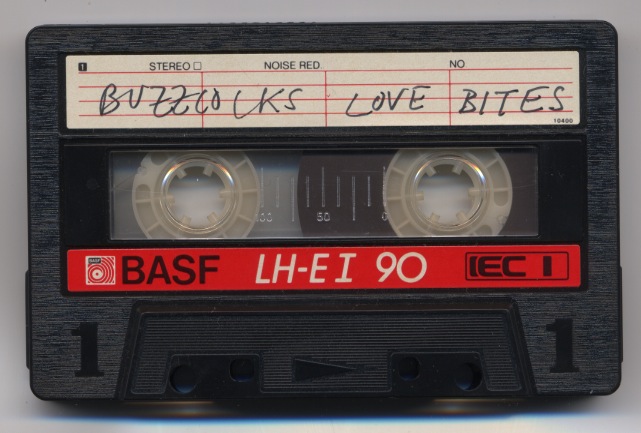
badische anilin und soda fabrik


BASF was founded in 1865 to produce coal tar dyes. Its first products were aniline dyes, whose success was enmeshed with that of the textile industry. In 1871 the red dye alizarin was synthesised. Other synthetic pigments followed… Production shifted away from colour stuffs to fertilisers in the early twentieth century, and in the 'stabilsation' years BASF merged with IG Farben as part of a rationalisation of the chemical industry. At this time production concentrated on synthetic rubber, fuels, operating agents and surface coatings, as well as advancing a sideline in recording technologies [notably magnetic tape for the Magnetophone recording device].

Synthetic Worlds / Esther Leslie / Reaktion / 2005

The interface between coal and steel is coal-tar. Imagine coal, down in the earth, dead black, no light… Growing older, blacker, deeper, in layers of perpetual night…
A thousand different molecules waited in the preterite dung. This is the sign of revealing. Of unfolding.This is one meaning of mauve, the first new colour on Earth, leaping to Earth's light from its grave miles and aeons below.

Pynchon / Gravity's Rainbow

NON SINE SOLE IRIS

…the rotten shimmer

Magnetic tape recording, which simulates the physical grooves of a phonograph record via continuous magnetically alterable particles, was first demonstrated by BASF/AEG in 1935 (Schoenherr), although this development did not reach the United States until the Allied forces captured Radio Luxembourg in 1944, discovering “a new Magnetophone of extraordinary capabilities” (Kittler, 1999:106).